Showing posts with label Bomb ISI headquarters. Show all posts

Friday, 3 May 2013

Rogue Pakistan Army to go back to terror sponsoring after NATO withdrawl in 2014


Pakistan Army maintaining contact with Taliban and hiding Mullah Omar in its headquarters in Rawalpindi after Abbottabad incident.

Taliban leaders are being disguised as lecturers and beard sporting prayer leaders in Pakistan Military Academy where cadets are being taught the Islamic glory of the bygone era.

Wednesday, 24 April 2013

Turkistan Islamic Party releases video of children in training to fight in China

When a drone comes and attacks them from above, Pakistanis will claim there were innocent women and childen killed. 


The Turkistan Islamic Party, an al Qaeda-affiliated terror group, has released a video that shows young children firing weapons while at a training camp in Pakistan. The video was released by Islami Awazi, a propaganda arm of the Turkistan Islamic Party. A clip of the video was published on the LiveLeak video website. In the video, the children, some of whom appear to be no older than six, are shown firing handguns, AK-47 assault rifles, and a PKM machine-gun from various positions. At one point, 13 children are seen on line, firing AK-47s while standing and lying down. As the children fire their weapons, the black flag of the Taliban and a light blue banner used by the Turkistan Islamic Party can be seen flying in the background. The video is similar to others released by allied jihadist groups such as the Movement of the Taliban in Pakistan, the Islamic Jihad Group, and a jihadist alliance called the Fedayeen-i-Islam. All of these groups are known to run camps in North and South Waziristan that train children. The Turkistan Islamic Party operates in China as well as Central and South Asia and is thought to have scores of fighters in Pakistan's tribal areas and in Afghanistan. TIP fighters have been killed by Coalition forces in Afghanistan and by US drone strikes in Pakistan. Abu Ubaydah Abdullah al Adam, a senior al Qaeda leader who serves as the terror group's intelligence chief, has written several biographies for TIP fighters killed in Pakistan and Afghanistan. The group's leaders also hold senior positions in al Qaeda. Abdul Haq al Turkistani, the slain former leader of the Turkistan Islamic Party, was a member of al Qaeda's Shura Majlis, or executive council. And Abdul Shakoor al Turkistani, who was rumored to have been killed in a drone strike last year, is also thought to have been appointed to the Shura Majlis, in addition to being designated commander of al Qaeda forces in the tribal areas. Prior to the US invasion of Afghanistan in October 2001, Abdul Haq ran a training camp for his recruits at al Qaeda's camp in Tora Bora in Afghanistan's Nangarhar province [see LWJ report, The Uighurs in their own words]. He later reestablished camps for the Turkistan Islamic Party in Pakistan's lawless, Taliban-controlled tribal areas. Twenty-two Turkistan Islamic Party operatives were ultimately captured and detained at the Guantanamo Bay detention facility; since then, 17 of them have been released or transferred to allied governments, and five have been approved for release but have refused resettlement in volunteer countries.

Pakistani Terror General Hameed Gul (Bull) opens his mouth again ...in Urdu

When Pakistani Terror General Hameed Gul (Bull) PIGS fly as cupids and donkeys bray.

Monday, 22 April 2013

Rental Pakistan Army good for nothing : Four soldiers killed in NWA IED blast

Getting beaten by the Taliban again and again 


MIRANSHAH: Four soldiers of the Pakistan Army were killed and four others sustained injuries when an improvised explosive device (IED) hit a military convoy near the Khajoori area of Mir Ali subdivision in North Waziristan on Sunday.
Security officials said the military convoy was on its way to Miranshah, the headquarters of North Waziristan, from Bannu when it came under attack.They said unknown people had planted an IED under the bridge in the Khajoori area, considered as the gateway to North Waziristan. It went off when the military convoy was passing through the area, they added.

Military officials said four soldiers died on the spot while four others sustained injuries. The injured soldiers were shifted to the military hospital in Bannu.Those died in the blast were identified as Sepoy Assadullah, Sepoy Fazal Azeem, Zulfiqar Masih, a sweeper, and Sepoy Sharif.
The authorities had already clamped curfew in the entire North Waziristan, including the Bannu-Miranshah road due to movement of the security forces on Sunday.

Monday, 15 April 2013

ISAF captures senior Lashkar-e-Taiba leader in Ghazni who was trained by Pakistan Army and financed by ISI

Pakistan Army Generals laugh at a joke at the corps commanders meeting in Rawalpindi to discuss next places to bomb in the world with the help of terrorists
  KABUL, Afghanistan – An Afghan and coalition security force arrested a senior Lashkar-e Tayyiba leader and detained a number of other insurgents during an operation in Andar district, Ghazni province, today.

The leader is alleged to have planned and participated in multiple attacks against Afghan and coalition forces throughout Kunar, Kandahar and Ghazni provinces. He is known to have links to multiple foreign fighters, and was actively planning a high-profile attack at the time of his arrest.

In other International Security Assistance Force news throughout Afghanistan:

South

Afghan and coalition security forces confirmed today the death of senior Taliban leader, Tawab, during an operation in Panjwa’i district, Kandahar province, Saturday. Tawab was in charge of approximately 50 fighters in the area and was responsible for most insurgent activity and attacks against Afghan and coalition forces in western and central Panjwa’I district.

Afghan and coalition security forces confirmed today the death of senior Taliban leader, Mullah Asadullah, during an operation in Nahr-e Saraj district, Helmand province, Wednesday. Asadullah had operational control over a cell of insurgents responsible for multiple attacks against Afghan and coalition forces. His group has been known to use IEDs, vehicle-mounted automatic grenade launchers, rocket propelled grenades and various other weapons during their operations.

Afghan and coalition security forces confirmed today the death of Taliban leader, Yassin, during an operation in Washer district, Helmand province, Saturday. Yassin was in charge of a cell of fighters responsible for IED operations against Afghan civilians in Kandahar district. He was also involved in the facilitation of weapons and vehicles for use in attacks against Afghan and coalition forces.

East

An Afghan and coalition security force arrested a Taliban leader and detained one other insurgent during an operation in Sherzad district, Nangarhar province, today. The leader is believed responsible for planning and conducting attacks on Afghan and coalition forces throughout Nangarhar province. He is also accused of using his residence as a staging point for insurgent operations, and of housing Taliban fighters and weapons in preparation for later assaults. The security force seized two AK-47s, one automatic shotgun, one grenade and ammunition as a result of the operation.

An Afghan and coalition security force killed insurgent leader, Rauf, and two other insurgents during an operation in Asadabad district, Kunar province, yesterday. Rauf was an operational planner responsible for coordinating attacks on Afghan and coalition forces in multiple provinces throughout Afghanistan. He has facilitated funding for foreign fighters and coordinated operations between the Taliban and other insurgent groups.

Sunday, 14 April 2013

US drones kill four Pakistani Terrorists in North Waziristan

Leaving aside the hype, we ordinary Pakistanis are very grateful for these drone strikes...good riddance of these terrorists.

All 6 drones could have fired all the 12 hellfire missiles.


MIRANSHAH: At least four people have been killed while several more were injured by a US drone strike on Sunday in North Waziristan, security officials said.

The attack took place in Datta Khel town, 35 kilometres (22 miles) west of Miranshah, the main town in North Waziristan region which borders Afghanistan.

Six US drones flew over the area when one of them fired two missiles at a compound in the Manzarkhel area of the town.

"The drones kept hovering at the compound for a while and then one drone fired two missiles at the time of sunset," a local security official said.

An eyewitness said that the compound caught fire after the strike leaving all the bodies burnt.

Ever wondered what these no go areas look like?

Taliban will respond with a suicide attack

Pakistan Army and intelligence agency ISI supplies weapons and rations to the terrorists to infiltrate into Afghanistan as you can see there is no vegetation or aammunition factories in sight here in Datta Khel area. How do these militant terrorists get food and ammunition?

Friday, 12 April 2013

Taliban peace envoys living in luxuries, eating, making babies with Pakistani wifes in Qatar

“The Americans want their soldier back, the Taliban want a vacation, the Pakistanis(aka notorious Pak Army and intelligence agency ISI) want the Taliban to look independent of them, and the Afghans want distance between the Pakistanis and the Taliban.” 


DOHA, Qatar: When a handful of Taliban emissaries flew into Qatar on an American plane in 2010, the Obama administration hoped they would help negotiate a peace deal that could stabilize Afghanistan and allow the United States a graceful exit.

Three years after that secret arrival, the Taliban officials remain idle and their political office here remains unused.

“They are just living here enjoying the air-conditioning, driving luxury cars, eating and making babies,” one Afghan diplomat in Qatar said. “It’s all they can do; they have no work to do,” said a report published in the New York Times.

They are unlikely to see a negotiating table anytime soon either, with the new fighting season in Afghanistan off to a particularly violent start and with the latest push to restart talks all but abandoned. Once again, the Taliban’s attention is on the battlefield, and on what may be gained or lost there as the American military begins its withdrawal from the war.

The Taliban presence here — eight or more relatively high-ranking officials with their families, Afghan officials say — is occasionally reconfirmed in a sighting on the streets or, in the case of the Afghan diplomat, when the Taliban men come to the sleepy Afghan Embassy here to register the birth of another child.

Early insurgent negotiations with American officials had a faltering start, initially over a proposed prisoner exchange, in which five Taliban figures being held at Guantánamo Bay, Cuba, would be released in exchange for the freedom of the lone American soldier being held prisoner by the Taliban, Sgt. Bowe Bergdahl. But American officials say that their talks have ended and that there have been no further discussions with the Taliban since early 2012.

Recently, Western diplomats in Kabul, Afghanistan’s capital, expressed hope that the discussions might resume amid intense diplomatic activity by many countries to push peace talks, this time led by Afghanistan. That hope now appears to have fizzled once again, and diplomats’ expectations of some movement by the end of March from the Taliban side have come to naught. President Hamid Karzai met here with the Qatari emir, Sheik Hamad bin Khalifa al-Thani, on March 31 in what Afghan officials billed as discussions about opening the office, but no developments were announced after the meeting.

“There is a limit to how long we can wait,” said another Western diplomat familiar with the peace efforts. “If at some point they don’t issue statements, it’s not open-ended. There are ways we can pressure the Taliban in Qatar.”

Officially, the Qataris have never explicitly admitted that the Taliban are even present here, and the government-controlled press never mentions it, although they have acknowledged that they are willing to host an official office for peace talks.

Qatari officials did not respond to requests for comment about the Taliban presence.

“With the Taliban, the Qataris have a hot potato,” said an Afghan journalist working here, who spoke on the condition of anonymity for fear of being expelled. “How do you handle hosting suicide bombers? They can’t acknowledge them until that sort of activity stops.”

The Taliban representatives here are not lightweights. The most prominent among them is Tayeb Agha, the chief of staff to the Taliban’s leader, Mullah Muhammad Omar. Others include Sher Mohammad Abbas Stanikzai, the former Taliban health minister, and Qari din Mohammed Hanafi, their former minister of planning. The delegation includes veteran diplomats like Mualavi Shahabadin Delawar, the former Taliban ambassador to Saudi Arabia; Sohail Shaheen, a former ambassador to Pakistan; and Hafiz Aziz Rahman, the representative to the United Nations for the Taliban government when it ruled Afghanistan.

Just why the effort to open a Taliban office has faltered is a matter of dispute. The Americans say the Taliban have simply decided to continue fighting, worried by pressure from their own hard-liners and concerned that entering peace talks would sap their will on the battlefield. “No one wants to be the last one to die before peace talks start,” as one diplomat put it.

The Taliban say the Americans reneged on their confidence-building pledge to free the Guantánamo five, which would have been politically difficult for President Obama, given bipartisan opposition in Congress to such releases. Instead, the Americans insisted that talks would have to include the Afghan government first. The Taliban has rejected that condition, deriding the government of President Hamid Karzai as a puppet regime and saying it would talk to the Afghan government only after reaching a settlement with the Americans.

Still, neither Western diplomats nor the Taliban have given up on the idea of talks in Qatar. “There are Taliban all over the place talking about peace, but the U.S. government’s view is that the most promising is the Doha track,” one diplomat said.

Wahid Muzhda, a former official in the Taliban’s Foreign Ministry who now lives in Kabul but maintains contacts with the insurgents, said that “some of the Taliban still believe it’s worth having the office there, but its prospects do look dim.”

Both Taliban and American officials publicly agree on one thing: that they are no longer talking to each another, officially or unofficially.

That, however, is a development that the Afghan government has refused to believe. President Karzai has openly accused the Americans of doing so. “We think they are secretly talking,” the Afghan diplomat in Qatar said. “America is the best friend of Afghanistan, and between friends we should tell each other what we’re doing.”

The Afghans have not tried to block the Qatari initiative. “It suits everybody,” said the Afghan journalist working in Doha. “The Americans want their soldier back, the Taliban want a vacation, the Pakistanis want the Taliban to look independent of them, and the Afghans want distance between the Pakistanis and the Taliban.”

While in Qatar, the Taliban have scrupulously avoided all public appearances, refusing interviews and issuing no statements — which the Qataris have made a condition of their presence.

An Afghan diplomat was at a shopping mall in Doha recently and heard a child call out in Pashto, the language used by most Taliban.

The diplomat turned and saw Hanif din Mohammad, a Taliban representative from northern Badakhshan Province. Introducing himself as an embassy official, the diplomat then said, “So, are you from the other side?” Blushing, the Talib turned and walked away, children in tow.
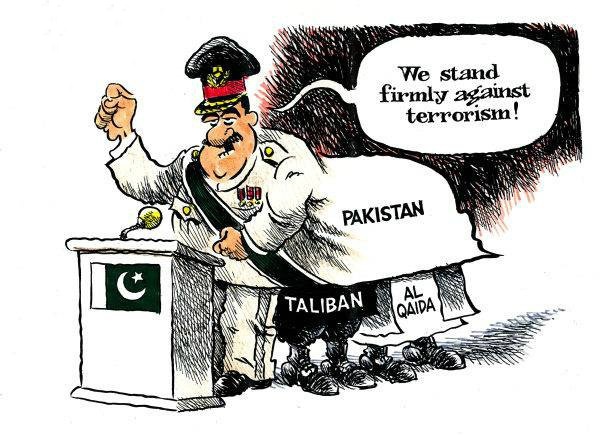
Pakistan Army comes up with new money making schemes after US Govt. cuts War on Terror rental funds to Pakistan Army

This one is for skiers


Thursday, 11 April 2013

Rogue Pakistan Army and terrorist intelligence agency ISI helped sell their mother for 10 dollars for CIA agent Raymond Davis


The burly American was escorted by Pakistani policemen into a crowded interrogation room. Amid a clatter of ringing mobile phones and cross talk among the cops speaking a mishmash of Urdu, Punjabi and English, the investigator tried to decipher the facts of the case.

“America, you from America?”
“Yes.”
“You’re from America, and you belong to the American Embassy?”
“Yes,” the American voice said loudly above the chatter. “My passport — at the site I showed the police officer. . . . It’s somewhere. It’s lost.”
On the jumpy video footage of the interrogation, he reached beneath his checkered flannel shirt and produced a jumble of identification badges hanging around his neck. “This is an old badge. This is Islamabad.” He showed the badge to the man across the desk and then flipped to a more recent one proving his employment in the American Consulate in Lahore.
“You are working at the consulate general in Lahore?” the policeman asked.
“Yes.”
“As a . . . ?”
“I, I just work as a consultant there.”
“Consultant?” The man behind the desk paused for a moment and then shot a question in Urdu to another policeman. “And what’s the name?”
“Raymond Davis,” the officer responded.
“Raymond Davis,” the American confirmed. “Can I sit down?”
“Please do. Give you water?” the officer asked.
“Do you have a bottle? A bottle of water?” Davis asked.
Another officer in the room laughed. “You want water?” he asked. “No money, no water.”
Another policeman walked into the room and asked for an update. “Is he understanding everything? And he just killed two men?” 

Hours earlier, Davis had been navigating dense traffic in Lahore, his thick frame wedged into the driver’s seat of a white Honda Civic. A city once ruled by Mughals, Sikhs and the British, Lahore is Pakistan’s cultural and intellectual capital, and for nearly a decade it had been on the fringes of America’s secret war in Pakistan. But the map of Islamic militancy inside Pakistan had been redrawn in recent years, and factions that once had little contact with one another had cemented new alliances in response to the C.I.A.’s drone campaign in the western mountains. Groups that had focused most of their energies dreaming up bloody attacks against India were now aligning themselves closer to Al Qaeda and other organizations with a thirst for global jihad. Some of these groups had deep roots in Lahore, which was why Davis and a C.I.A. team set up operations from a safe house in the city. 

Tuesday, 9 April 2013

Clashes continue in Tirah valley; 35 Pakistan Army troops including SSG killed

Pakistani soldiers are not being given right equipment to fight the terrorists they themselves created 20 years ago. 

Pakistan Army generals anxiously waiting for 2014 NATO Afghan withdrawal when they can go back to their marriage hall leasing and cup cake making bakery businesses which are their strong points. Winning wars and cleaning Pakistan and world of terrorism is none of their business.


Several soldiers, including SSG commandos, have been killed in the battle for Tirah valley on Saturday, around 30 militants have also been confirmed dead along with scores of others injured.


PESHAWAR: Four days of fierce fighting in northwestern Pakistan left 30 soldiers and nearly 100 militants dead as the army attempted to wrestle control of a remote, mountainous valley from the Taliban and their allies, military officials said Monday.

The army launched its offensive in the Tirah Valley on Friday after weeks of fighting between rival militant groups forced tens of thousands of civilians to flee the area. The valley is located in Khyber, part of the semiautonomous tribal region bordering Afghanistan, the main sanctuary for the Taliban in the country.

The army has launched scores of operations against the Pakistani Taliban in the tribal region in recent years, but certain areas like Tirah have remained outside their control. The Taliban have remained a serious threat and continue to launch attacks throughout the northwest and other parts of the country with frightening regularity.

The Pakistani Taliban have been waging a bloody insurgency against the government because of its alliance with the U.S. in fighting Islamic militants, and to establish Islamic law in the country. The group is allied with the Afghan Taliban but has focused its attacks inside Pakistan instead of Afghanistan.

The fighting in Tirah over the past four days has killed 30 soldiers and 97 militants, military officials said, speaking on condition of anonymity because they were not authorized to talk to the media. The air force has also conducted heavy bombing during the offensive, they said.

The officials claimed that the army has successfully seized control of a large portion of the valley from the Pakistani Taliban and their ally, Lashkar-e-Islam. The claims could not be independently verified.


In recent weeks, the Pakistani Taliban and Lashkar-e-Islam have been fighting against another militant group, Ansar-e-Islam, which is allied with pro-government tribesmen.

Over 40,000 people have been displaced from the valley since mid-March, according to a recent report by the U.N.'s humanitarian arm. Many of the displaced have sought refuge in the city of Peshawar and other parts of northwest Khyber Pakhtunkhwa province. They are in need of food, shelter, health care and clean water, said the U.N.

There is concern that the Taliban could step up their attacks over the next few weeks in an attempt to hamper parliamentary elections scheduled for May 11. The vote will mark the first transition between democratically elected governments in a country that has experienced three military coups and constant political instability.

Monday, 8 April 2013

Cheap Drones Made in China Could Arm U.S. Foes


Cheap drones made in China could end up arming potential U.S. foes such as North Korea, Iran and Pakistan terrorist organizations (aka Pakistan Army).

China already makes drones that don't quite match up to U.S. military drones, but for a fraction of the cost. The Chinese military envisions such unmanned autonomous vehicles (UAVs) scouting out battlefield targets, guiding missile and artillery strikes, and swarming potential adversaries, such as U.S. carrier battle groups."In whatever future conflict scenario we're in five or 10 years from now, the proliferation of UAVs is going to complicate things for the U.S. military," said Ian Easton, a research fellow at the Project 2049 Institute.

China has built a huge military-industrial complex to support its growing drone fleet, which consisted of about 280 military drones as of mid-2011, according to a report released by the Project 2049 Institute on March 11. Chinese manufacturers supplying the military and state agencies also have begun seeking foreign buyers in a global drone market that aerospace and defense market research firm Teal Group estimates to be worth $89 billion over the next 10 years.Retired Chinese generals have stated on Chinese state television station CCTV that Chinese drone technology lags American technology by about five years, Easton said. However, Chinese manufacturers are touting their plans to build drones five or even 10 times cheaper than comparable U.S. drones, whose hardware alone costs $5 million to $10 million.

Sunday, 24 March 2013

Suicide attack martyrs 17 "Pak" Army soldiers in NWA

Taliban used a water tanker this time :) 
Welcome home Gen. Mushy.


MIRANSHAH: A suicide bomber rammed a water tanker into a Pakistani checkpost late Saturday, killing 17 soldiers in North Waziristan, the military said.

There was no immediate claim of responsibility for the attack."In last night's attack on a security forces' checkpost in North Waziristan, 17 security forces personnel embraced shahadat (martyrdom)," the ISPR said.Security officials explained the sudden increase in the death toll after it jumped from six by saying that many of the dead had been trapped under the rubble following the blast.

Another 10 soldiers were also wounded in the attack on a check post operated jointly by the regular army and the Frontier Corps paramilitary.